Sharing everything relating to Business & Technology. Been using a fake surname “bleh” for 5 years and my dad doesn’t know. That’s cool.

Sharing everything relating to Business & Technology. Been using a fake surname “bleh” for 5 years and my dad doesn’t know. That’s cool.
During the Singapore National Conversation dialogue, many participants expressed a need for a stronger kampong spirit. This inspired local tech company Estatebuzz Pte Ltd to optimise resource sharing online, encouraging Singaporeans to better connect with their neighbours living close together for mutual benefits. Estatebuzz is the parent company of Sharetransport.sg, blockpooling.sg and microfranchise.sg, all of which enable users to collaborate with one another digitally to solve particular challenges through social media. In order to make this work, Estatebuzz does the following: 1. Micro-franchising - Freelancers can join various franchises for training, administrative support and other benefits, making a potentially higher income than if they were freelancing independently. This helps people earn a decent monthly income, yet have a flexible work timetable with a shorter commute. Such examples include giving tuition to neighborhood children and delivering makeup packages to people’s doorsteps. 2. Block-pooling – Using a ‘helping hands’ approach, people living in the same block can leverage their own resources to help one another. This is a win-win situation for both sides. For example, neighbours do not have to spend additional money for a rice cooker if another neighbour has a spare one, and extra cash can be saved by purchasing items such as oil and rice in bulk. 3. Share transport – With the public transport crunch and sky-rocketing certificate of entitlement (COE) prices, commuters are driven to consider car-pooling as a more viable way to get around Singapore. Users are now able to discover others who live and work near them and are able to either car-pool, taxi-pool or bus-pool to get to work. Drivers are able to receive up to $4.60 per person per trip. As of now, Estatebuzz is being funded by the founders, with external funding help from National Volunteer and Philanthropy Centre (NVPC). The founders of Estatebuzz hope that more people will register for the website, as this will solve community bonding and cooperation challenges among neighbours. It is sad that Singaporean modern society is not like the kampong days, when social capital and community links were much stronger. One could theoretically have been living in the estate for more than 20 years, and not know anything about the people living just a few metres away from them! This is the result of people either having the fear of being labelled as a “busybody” if they probed into another neighbour’s affairs, or being too shy to seek for help. It is heartwarming to see Estatebuzz’s willingness and eagerness to help the community by encouraging neighbours to interact more. Chatting with Mr Soh Chong Kian, a formal civil servant and now co-founder of Estatebuzz, was a great pleasure. We wish them all the best in their future endeavours.
Pecha Kucha, the Japanese term for the sound of conversation (“chit chat”), was recently held in Singapore. It created a space where people spanning multiple disciplines and fields of study shared their ideas and passions with others. This 9th installment of Pecha Kucha night was held at Home Club, Clarke Quay. The event is fundamentally quite unique, as it covers topics across a diverse range of industries. Pecha Kucha also has a quirky restriction: The speakers are only allowed to present 20 slides, each one on display for 20 seconds each. This style of presentation is known as the 20x20 format, which is aimed to keep individual presentations short, concise and interesting. The restriction also helps open up the stage for more speaker slots. Various people from all walks of life spoke, including Vanessa Kenchington of Plain Vanilla Bakery, Fakkah Fuzz, a stand-up comedian, and Alvin Ho of Atelier Hoko. Former lawyer Vanessa Kenchington left her job as a law firm associate to grow her bakery business without any formal culinary training. She had to learn how to frost and bake cupcakes from scratch, and reach a minimum quota of 100 cupcakes a day. As an entrepreneur, “Practice makes perfect” was a very important value to her, as she saw it as a sign of dedication to making any small business succeed. Vanessa also mentioned that her experiences, loved ones and family were the source of her strength that validated her business plan. Alvin Ho, co-founder of independent research platform HOKO, shared his research on void deck cat behaviour. This research includes investigations towards material and immaterial conditions that make up experiences in everyday life. He used to see some stray cats setting up their ‘home’ near his apartment and he began to question himself, “Why do these cats choose to live around the area? Is there any hidden potential embedded in my environment that the majority has failed to notice?” He then started his field study on 4 cats, in search for their ‘immaterial house’ embedded in the midst of our everyday environment. [youtube]https://www.youtube.com/watch?v=nJ2BnXdvjpg[/youtube] We also had Jonathan Wong, who represented Microsoft as the product manager for Internet Explorer. He talked about his life and how as a product manager, he markets IE to consumers - not an easy task, given that people’s perspectives of the new browser interface are heavily influenced by old stereotypes and impressions of IE. Pecha Kucha Night ended with the last speaker, Sam Chablani, who shared his journey training under Michelin-starred chefs at the Culinary Institute of America. He gave interesting insight into the world of professional kitchens, explaining how the modern-day chef had to master various aspects of not just cooking, but business, marketing and entrepreneurship as well. You should attend the next Pecha Kucha Night Vol #10, which is happening soon. For more information, visit: http://www.pechakucha.org/
Some may wonder where some of the world’s startups begin. Perhaps not as well known as Silicon Valley, Israel is home to one of the world’s best enterprises with an astonishing figure of 4,800 active startups as of June 2013. Israel is said to be the next in line as it rewrites the future of cyber security. Today, for the very first time in Singapore, a rare opportunity has arisen for startups to reach the Far East market and establish themselves in this exciting ecosystem. However, only 10 Israeli Startups has been selected to pitch their idea to Singapore’s top investor community. Microsoft Singapore is proud to be the venue sponsor for this event where the BizSpark Team had the opportunity to network with the Israeli startups and listen to their pitches. Below are some promising Israeli tech startups that took part in the IX World Tour 2013: 1. NOK NOK #1 App on Israel app store Just when you thought that the telecom services could not get any better, Noknok mobile application was launched. This application allows users to receive free incoming calls on their original local number from all mobiles and landlines. Noknok combines technology such as SIP (Session Initiation Protocol) and VOIP (Voice over Internet Protocol) to transform the way people reach out to one another. The reason for its position in the app store is of the fact that they eliminate expensive roaming charges for the users. https://www.noknok.com 2. Folloyu, featured by Global Entrepreneurship Week 2012 Maintaining online activities has just been made easier with Folloyu. Folloyu aims to empower web visitors where all uncompleted purchases and web activities can be continued, cross-device with a single click of a button. This application makes use of cloud technology in order to synchronize a URL across devices, allowing the user to seamlessly transition their online activities with any interruptions. www.folloyu.com 3. Fashioholic raised $1 million in seed funding Fashioholic is a leader in Serious Games, designed to provide added value other than mere entertainment. The games are also meant as a marketing channel for fashion brands, helping designers to collect user’s preference data to deliver targeted merchandise. Their application, Fashion Eye, has shown outstanding engagement retention statistics with over half a million items displayed to consumers. http://www.fashioholic.com/ We were given the honor of working with Esther Loewy (founding partner of Boot vamp venture, pictured below) to prepare the night for the Israeli Startups. Fine wine, tidbits and snacks were brought to be shared among the startups and investors that day. It was a night filled with lots of invaluable knowledge, which helped broaden my horizons greatly. With that, I truly hope that Singapore would have more of such events which could also be open to the general public. It would definitely be an eye-opener for all and Singapore’s entrepreneurs could take a leaf out of these great entrepreneurs’ books. I also hope to see more of our aspiring local startups in future.
We have not featured a pre-launch product from a Singapore startup that has garnered this much press attention. This group of childhood friends - Roger Chang, Brendan Goh and Tsang You Jun refer to themselves as “Captains” and “Pirates” in their company, appropriated called Pirate3D. You may have read our previous post on Prototype Asia and understood that 3D printers create an object with digital designing and print in three dimensions with a special type of plastic-like acrylic. But did you know that 3D printers will soon be available everywhere for everyone? Chief Executive Pirate, Cap’n Roger, says “in (the) future, people will look back and wonder in amazement how we could survive without 3D printers.” The startup has received US$482,000 in funding through Red Dot Ventures and has raised a further US $1,438,000 through its Kickstarter campaign. Set to officially have the printers available in 2014, there’s been plenty of buzz over the product due to its sleek design and user-friendly set up. Our team had the opportunity to tour Pirate3D’s cosy work place and are proud to be the first few to see the prototype before its official launch in 2014! The developers and the entrepreneurs are discussing the various ways to cut production costs, and they seem really engrossed in their discussion. Despite their busy schedule, they showed us around and brought us to the second level of the office where we saw their prototype of a 3D printer. The figurine model that was made from the 3D printer is a good replica of the actual model of the human hand. How Pirate3D printer works The flagship printer is designed for easy installation and setup which supports cloud printing. It allows you to print and customise your design over the web from anywhere, i.e. phone to the printer. The biggest plus point of the product is the printer’s ability to be mobile enabled (supports Wi-fi) and it does not require cable hookups. Pirate3D also designed a virtual store called Treasure Island, for users to print various type of customised models supported by drag-and-drop, web-based graphic user interface for easy use. In addition to the startup visit, questions were raised to the crew on their decision to create a startup and their future plans for their company. Why did you guys decide to startup Pirate 3D? It started when Brendan Goh and Tsang You Jun, two of its founders, took part in a business competition. They were given a project to make a prototype that is able to change its colour depending on the temperature of its contents. However, they faced problem in prototyping. Prototyping is expensive and requires a considerable length of time for production. They found themselves to be really frustrated at the waiting process and pulled in Roger Chang to help assemble the kit themselves. Roger’s professor, Professor Neo Kok Beng, was also brought in and suggested that they should build their own 3D printers. The team chanced upon this idea and turned it into a business opportunity. They unanimously agreed on calling themselves “Pirate3D” in five minutes. So, what are the future plans for Pirate3D? The crew commented that currently, they are looking on to expand their sales and continue their research and development (R&D) for future product lines. They also received numerous calls from design schools such as Nanyang Fine Academy of Arts (NAFA) and Laselle to pre-order the printers for the school students’ coursework project. They also noted that “We don’t want to be just a 3D printer company; we want to be the ones that history books remember as who we truly brought the technology into homes of everyday” - we salute the crew for such a great ambitious aim! We are pretty sure that in just a couple of years, 3D printing is going to be a smash hit. With the rising popularity of demand in the 3D printing market, we hope to see the birth of more 3D printing startups like Pirate3D and Prototype Asia in the near future. For more details, visit: www.pirate3D.com
Every week, we pay tribute to the growing number of tech, media and creative companies sprouting in Singapore - the startup scene is alive and well! We visited GimmieWorld Pte Ltd on a Tuesday afternoon, as part of our continued initiative to visit different start-ups weekly. GimmieWorld, a Singapore-based provider of loyalty software for mobile and online publishers, focuses on creating customer loyalty. They have secured large players as anchor customers - for instance, Hungrygowhere.my, which provides restaurant guides, reviews and buffets to discover what and where to eat. According to Gimmie’s founder and CEO David Ng, he feels that GimmieWorld loyalty solutions can offer new revenue streams for their partners. In today’s commercial world , the importance of retaining existing customers and expanding business is paramount. Companies with more channels face difficulties in managing interactions with their customer base. GimmieWorld addresses this problem while creating delight through an enhanced user experience. User experience is important for any software solution, as the software is primarily an administrative working instrument. They understand that the success of their software critically depends on how motivated users feel to work with it. The entire loyalty solution was designed with user friendliness in mind, such as the ability to input their own rewards in only two minutes and choosing from customisable pre-built templates. How does GimmieWorld work? Publishers get an online dashboard to manage their programs. GimmieWorld requires users to register through Facebook, allowing brands to incentivise social sharing through additional offers. Rewards are given to the users for a variety of actions such as referrals, Facebook invites and unlocking badges. Once they are ready, users can visit a marketplace where they can redeem their points for free or towards discounted items such as Coffeebean and Breadtalk vouchers. Publishers can get revenue from all the reward redemptions provided by partners. Analytics and reports are auto-generated which enable companies to get insights of all reward members including their details, reward redemption statistics to track the events and rewards instantly. (refer to picture below) GimmieWorld also came up with a creative feature exclusively for retailers. The software can help to create virtual loyalty cards for users using their own Facebook account details. Each user will be given a unique ID number and barcode on their phone to show at the store. The barcode will be scanned using the modified barcode scanners which the company provides, allowing flexibility of plugging into laptops and tablets getting customer’s point of sale data easily. (refer to picture below) With GimmieWorld’s various ways to enhance CRM (customer relationship management) user experience, it is no doubt that their CRM software will soon be a hit in Singapore’s market. The company will be enabling others to resell the platform, and launch new product features for different types of mobile devices. If you are passionate about developing and building new software, do contact them as they are looking for interested interns to join their fun-loving team. Lastly, check out their cosy studio workplace environment they work in. Shelves are neatly packed with utensils, bottles and containers to categorise their items. There is also a microwave available for staff members to heat up their lunch. GimmieWorld office is located at Soho1 at central Clark Quay, which is five minutes away from the MRT station. For more details, visit: http://gimmieworld.com
On 19 September, we had our bi-monthly BizSpark night with over 70 startup founders and investors. We’ve summarised the highlights below: The first speaker, Saemin Ahn from Rakuten Ventures, spoke on fundraising for startups. Rakuten Ventures is currently offering seed funding for aspiring entrepreneurs ranging from USD700, 000 – USD 1,000,000, and typically look for C2C based e-commerce companies. What do Rakuten Ventures look for in startups? Rakuten Ventures are interested in innovative startups passionate about their great ideas. Ideally, Saemin said he was looking for startups developing a new app or product in a competing marketplace. Startups with existing apps may also qualify if they were able to enhance their app and bring a meaningful purpose of technologies to consumers and enterprises. In addition, startups should have the drive and commitment to experiment and improve with the collation of user activity and feedback. Saemin also commented that he is particularly interested in companies developing technologies such as: ...
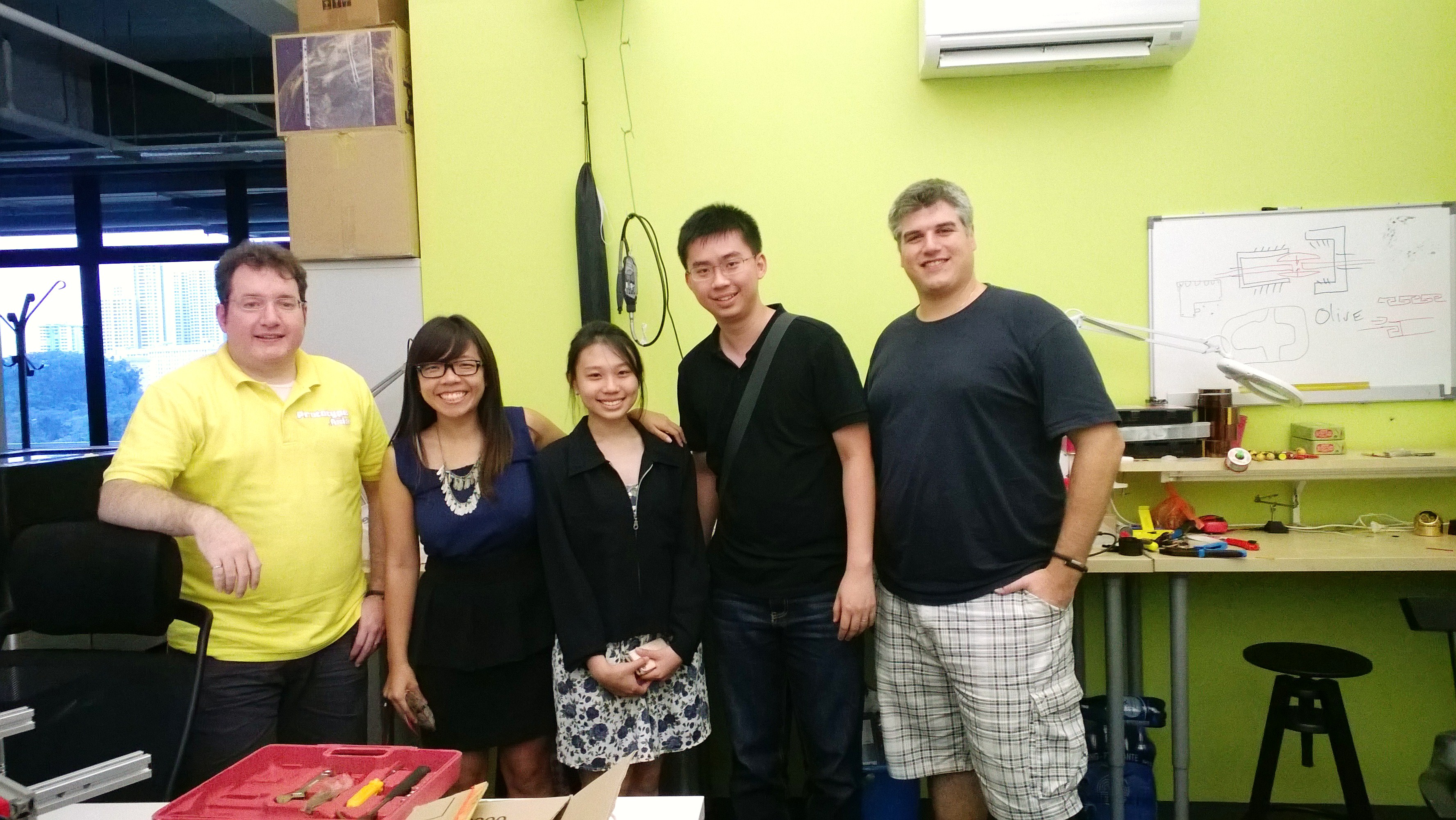
We have recently visited Prototype Asia Pte Ltd on Tuesday morning, to kick start our visitation to different start-up companies under our program, Microsoft BizSpark. Prototype Asia Pte Ltd, a company on the forefront of 4D printing, started out as a firm providing software prototypes and solutions in 2010. With turnover estimated to hit $1.24 million inoperations, Prototype Asia’s business model is one of the first few to have succeeded in 3D printing industry. The company transform ideas in products through the latest prototyping technologies. As a newly start-up, Prototype Asia Pte Ltd’s success story did not come easy, they had financial difficulties in getting bank loans and funds to purchase their 3D printing machines which each cost more than hundreds of thousand dollars. Thankfully, Singapore Economic Development Board has announced this morning to set aside $500 million over the next five years to develop the three-dimensional (3D) printing sector which will definitely aid their start-up funding here in Singapore. (Refer to link) So you might be wondering how they managed to print their 3D models out of printers for their clients? They have a printer that reminiscent of Star trek Replicator, creating something magical out of thin air. It can “print” in plastic, nylon and other materials for manufacture prototypes, injection moulds and figurines. We had the opportunity to get first-hand experience to view the 3D printer, that creates a three dimensional object by building its layer by successive layer, until object is complete. Just imagine a multi-layer cake, with baker laying down each layer one at a time until the entire cake is formed. Each layer is thinly sliced, horizontal cross section of eventual object. A sample prototype of an engine part is shown in picture above. Prototype Asia Pte Ltd is currently working with local enterprises that deal with consumer electronics, advertising and marketing in effort to improve their Research & Development processes. Models of complex architectural drawing can now be created quickly instead of handcrafting model out of cardboard and customers are able to create new products, redesign and refine existing ones into functional prototype. We were given the opportunity to tour around their office workspaces. Prototype Asia Pte Ltd have a conducive office environment to work in which they create 3D prototypes and transform design and ideas into products from there. They also have a vast range of C#/Java/Engineering-related library books that is available for the staff to loan for research and development purposes. Books are classified according to subjects and expertises. We would like to extend our heartiest thanks to Prototype Asia Pte Ltd for hosting the visit and wished them all the best in their business. If you are looking for a career in mechanical and software engineering, contact them at http://prototype.asia/careers/ Read more at http://prototype.asia/