ACE Microsoft Tech Talks - Create your own Predictive Model in 5 minutes with Azure Machine Learning

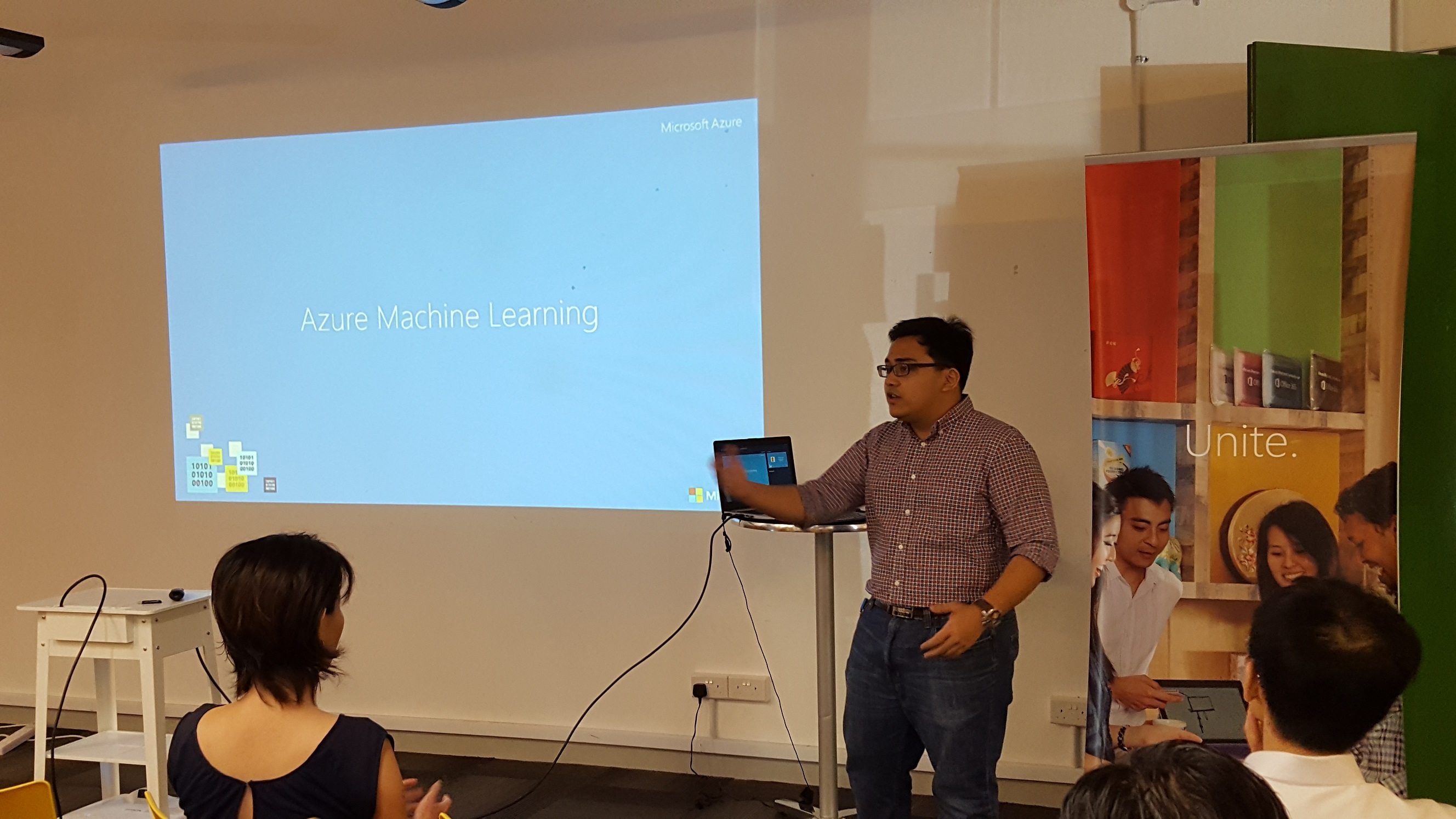
25th August 2016 Have you ever wondered, how long it would take to build a predictive model ? Traditionally, it would take hours or even days to build, train and evaluate a Predictive Model. Microsoft’s Technical Evangelist, Mohamed Izzat Khair, demonstrated that the traditional process of building a Machine Learning algorithm is soon to be deprecated. By using Azure Machine Learning, anyone could build their own Machine Learning model within minutes. During the session, he explained the basic concept of Predictive Modelling and guided the audience through the process of the Modern Machine Learning Lifecycle. The event mainly consist of audience who are just starting on their journey to develop a better understanding of Machine Learning, a good place to start for them is of course Azure Machine Learning. Here are a few resources kickstart your journey in Predictive Modelling, 1)Getting Started with Azure Machine Learning 2)Learn from existing Azure Machine Learning Experiment 3)Azure Machine Learning Hands-On-Lab 4)Full Machine Learning Course 5)Machine Learning Introduction Course Izzat starting off his presentation Explaining the use case for Azure Machine Learning If you have any questions with regards to Azure Machine Learning or Predictive Modeling, please feel free to contact Izzat at: a-momoha@microsoft.com Stay tune to our next ACE Microsoft Tech Talks in September where we will be learning to create Fast & Reliable Customer Service with Microsoft Bot Framework: https://www.weshipcode.com/events/ace-microsoft-tech-talks-way-fast-reliable-customer-service-microsoft-bot-framework/

Xamarin Dev Day Singapore 2016

Xamarin Dev Days are coming to Singapore! (Saturday, November 5, 2016) Xamarin Dev Days provide attendees with a hands-on learning experience. Spend the morning exploring mobile development with sessions from Xamarin, our technology partners, and members of your local developer community, then roll up your sleeves for an afternoon dedicated to diving into code. Each Xamarin Dev Days is unique, but you’ll always walk away with a better understanding of how you can build, test, and monitor native iOS, Android, and Windows apps with Xamarin. We have an amazing lineup of international Xamarin VIP’s joining the event. ——————————————————————————————————————————————————- Speakers: ...

Microsoft Innovation Huddle at LaunchPad - A Lap around Bletchley, Microsoft's Blockchain Platform

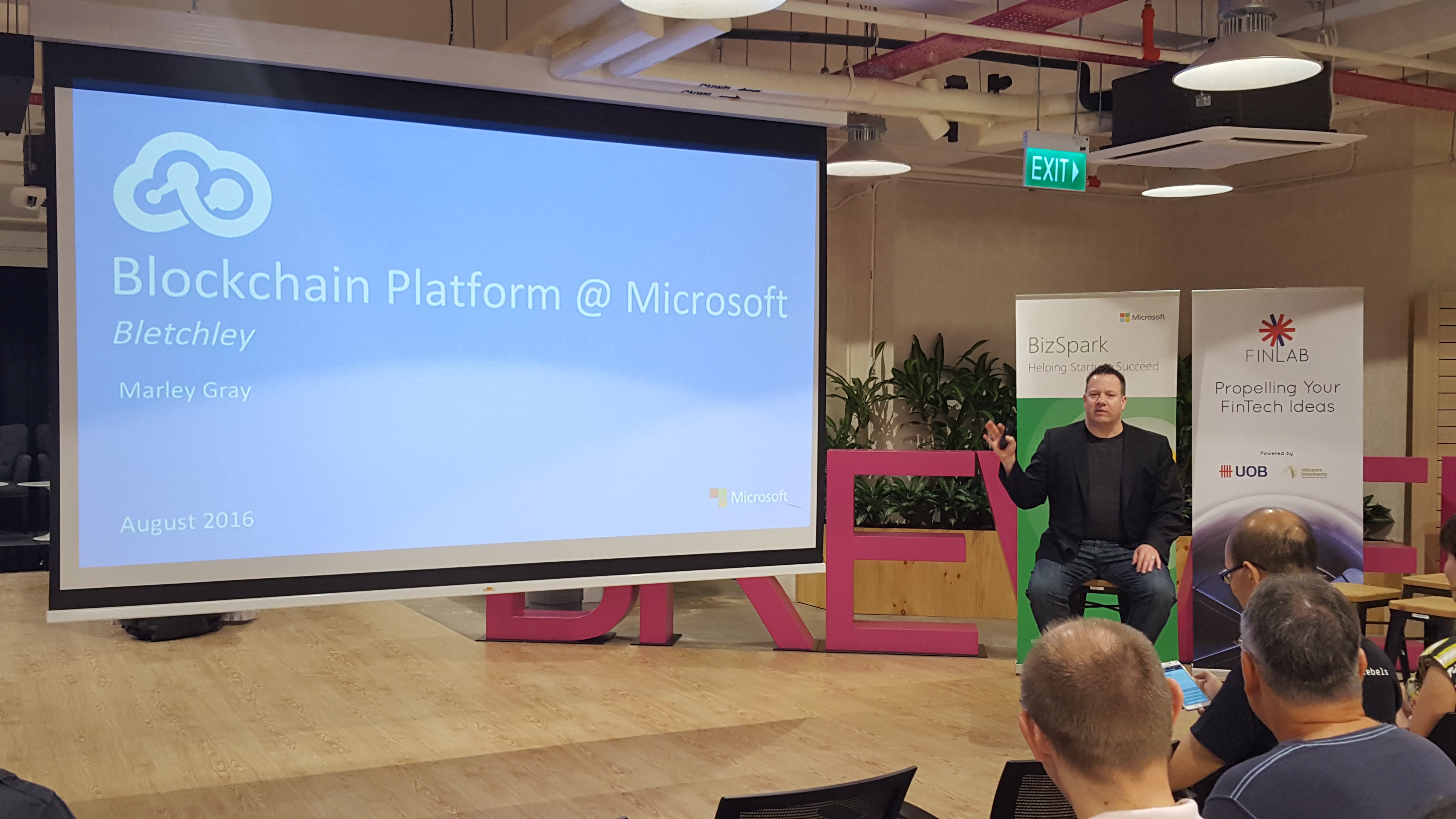
On 19th August, we held the first edition of our “Microsoft Innovation Huddle” BASH, where Marley Gray presented “A Lap around Bletchley, Microsoft’s Blockchain Platform” in front of an audience of over 30 industry professionals, start-ups, and developers. The participants loved the session and they are eager to find out more about our Blockchain technology on Azure Platform. They are also looking forward to our upcoming events in LaunchPad, such as: ...

UXSG Conference 2016

UXSG Conference 2016 7 - 9 Sep, 2016 Suntec Singapore Convention & Exhibition Centre Dear Spiffy community,The bi-annual UXSG Conference 2016 returns this year from 7-9 September! Organised by the volunteers behind the monthly UXSG meetups, this year’s conference looks at the theme of Transformation across Society, Communities, Products & Services and the Self. Whether you’re refining your business idea or building a startup, being an entrepreneur takes a lot of determination and adaptability to learn, make mistakes and take risks. One of the ways you can minimise risk is to invest in user experience (UX) and apply a human-centered design approach. So join us at UXSG Conference 2016 as we explore the fundamental impact that design has on our everyday lives. Programme highlights include: ...

Microsoft CEO Satya Nadella at Microsoft Developer Day

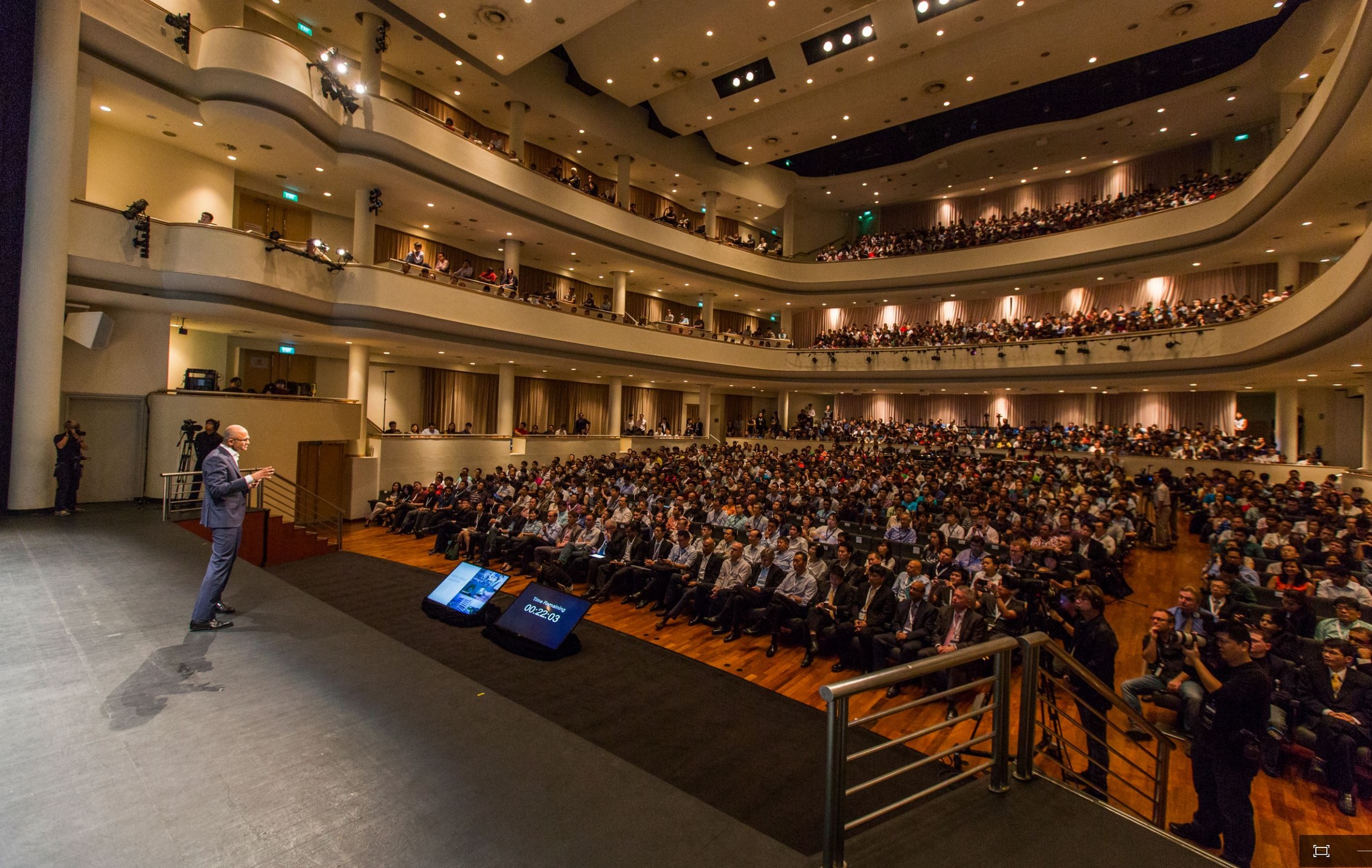
Microsoft CEO Satya Nadella Affirms Commitment to Singapore Developers at Microsoft Developer Day Event Attended by over 1,700 students and developers, Microsoft underscored the role of developers in enabling the digital transformation, and in fostering a people-centric Smart Nation SINGAPORE, 27 May 2016 — Microsoft CEO Satya Nadella reaffirmed the company’s commitment to empower the developer community in Singapore, to support the Smart Nation vision. He was speaking at the Microsoft Developer Day event, held at the National University of Singapore (NUS) where he highlighted the need for local developers to harness technology to the fullest, in order to be able to create opportunities, improve the lives of citizens, and build stronger communities for a people-centric Smart Nation. Over 1,700 students and developers attended the event, while an additional 3,000 followed the proceedings via live stream. [caption id=“attachment_21921” align=“aligncenter” width=“2272”] Microsoft CEO Satya Nadella delivering his keynote address at Microsoft Developer Day 2016 in Singapore.[/caption] During his keynote, Nadella underscored the role of the cloud and integrated technologies in helping businesses evolve and grow for the future, especially in today’s mobile-first, cloud-first world. He also highlighted that developers are expected to play a key role in enabling organisations to embrace digital transformation, and Microsoft is providing the resources and support to empower them to do so. “At Microsoft, our mission is to empower every person and every organisation on the planet to achieve more,” said Satya Nadella, CEO, Microsoft. “If we’re going to achieve this mission, we must empower every developer in Singapore with the technology and platforms to express their creativity and change the world.” [caption id=“attachment_21923” align=“aligncenter” width=“2272”] Microsoft CEO Satya Nadella chats with students and developers over breakfast on their innovations and how they can leverage Microsoft platforms to power new innovations.[/caption] He shared the example of how young startups such as Overdrive is leveraging the intelligent cloud to provide a true Internet-of-Things (IoT) platform targeting smart devices and sensors on the move. Through the platform, this young startup uses IoT sensors and Azure IoT Suite to provide pre-emptive logistics management and optimisation to fleet owners. In addition to the over 1,000 vehicles they currently support, they have expanded their technology to other areas such as using IoT to provide concerned parents the location of their children to ensure that they arrive home safely. “Microsoft has been working closely with the local developer community over the years. Through our various programmes, we have been empowering them with the tools and support to innovate, to help themselves and others achieve more. With a growing set of intelligent tools and resources that we are making available for developers to leverage, we hope that this will pave the way for them to unlock new opportunities, and to make a greater impact for a smarter and more inclusive Singapore,” said Jessica Tan, Managing Director, Microsoft Singapore. [caption id=“attachment_21922” align=“aligncenter” width=“2272”] Microsoft CEO Satya Nadella speaking to developers about the importance of the ability to harness the power of data.[/caption] In his keynote, Nadella also highlighted how Astoria Solutions, which provides software solutions to companies in the marine and oil & gas industries, and noted how Astoria has grown from being a Microsoft BizSpark startup to Microsoft’s ISV Partner of the Year in a few short years. Astoria Solutions has since helped numerous companies increase revenue, boost efficiency and improve workplace safety with their solutions, and is now in the midst of expanding their business operations to Houston, USA, and the Middle East this year with Microsoft’s support. In closing, Nadella noted how Microsoft is also committed to nurturing the next generation of innovators to support Singapore’s Smart Nation vision, through a new collaboration with NUS on data science and research. This collaboration will enable the parties to work collectively on data science research with the aim of translating it into tools and methodologies that can be used by the industry and academia; and allow them to cooperate on capability and talent development in analytics and research, with the aim of fostering a pool of skilled individuals equipped with a strong understanding of data analytics and data science. [caption id=“attachment_21924” align=“aligncenter” width=“2272”] Microsoft CEO Satya Nadella meeting Ruth, an innovative social robot designed by student developers from Nanyang Polytechnic to assist the elderly as a personal assistant.[/caption] The Microsoft Developer Day event builds on the momentum from Build 2016 held in San Francisco in March, where Microsoft outlined how it would help developers embrace the new era of conversational intelligence and create more personal computing for every customer, industry and business. With Microsoft tools and services, developers can build on, and reach every platform, so they can code the way they want and reach as many customers as possible. Microsoft is also helping developers to build applications for the cloud realities of today, and the cloud evolution of tomorrow. The company is in a unique position to do this, as the only cloud provider that supports every organisation and developer, from core infrastructure services, to platform services and tools, to Software-as-a-Service, with the flexibility to build and run apps in any language across any platform.

Microsoft @ IoT Asia 2016

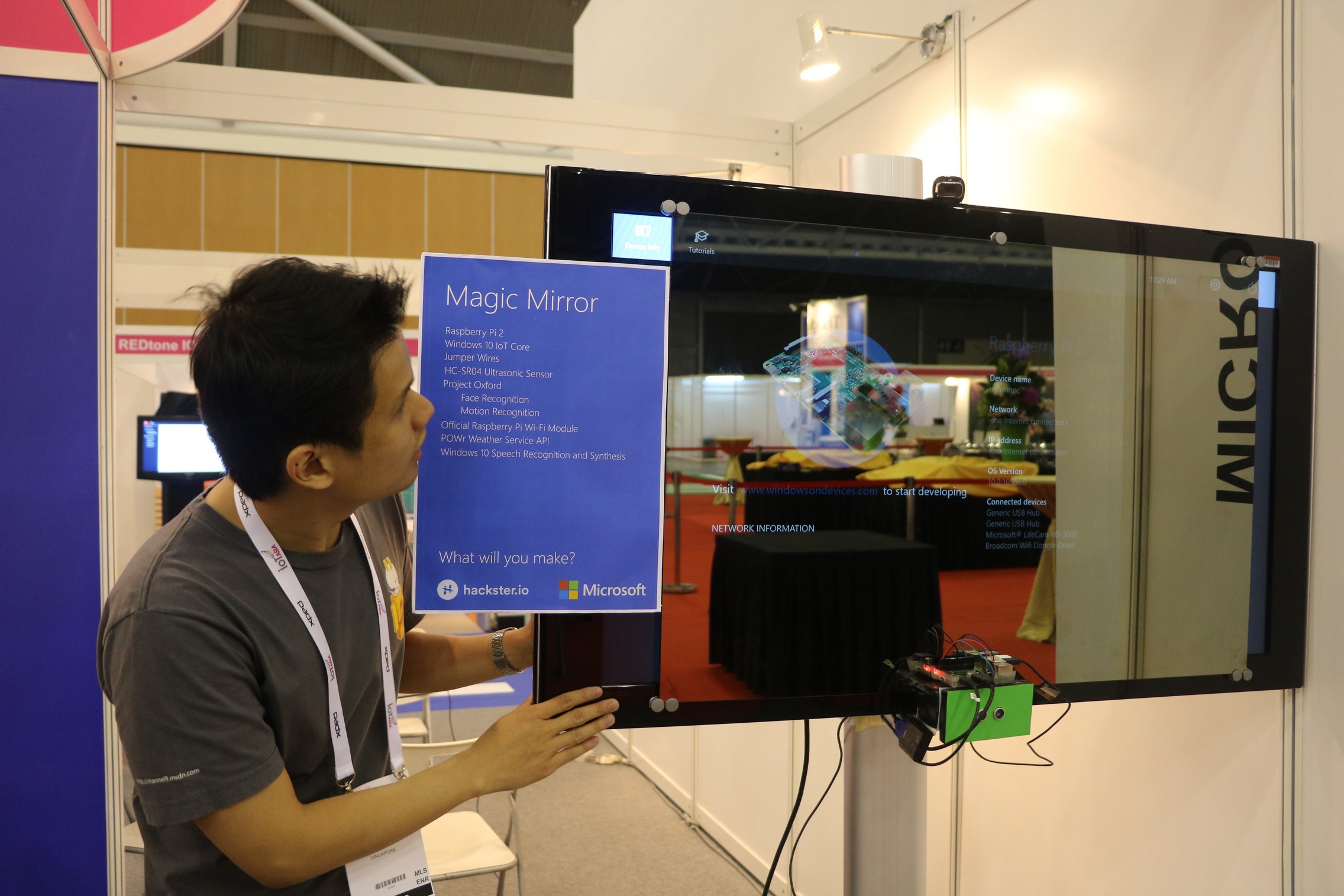
Introduction to IoT Asia 2016 IoT Asia is an annual event that is held across Asia and it is the region’s leading platform in the Internet of Things (IoT). As for IoT Asia 2016 held from 30-31 March 2016, Singapore was chosen to be the venue host for the event. The theme of the event which was “From Vision To Reality” which reveals new insights on emerging trends, new key technologies and directions for IoT’s proliferation in the region. The goal of the event was also to stimulate in-depth discussions to drive business collaborations in the region and undertake real nuts and bolts of IoT implementation. ...

Microsoft Build 2016: Keynote Highlights

Microsoft’s annual developer conference, Build, begun earlier today with some fantastic announcements to Windows 10 during the opening keynote. Here are some highlights for me. Linux will be integrated into Windows 10. You won’t see the Ubuntu desktop UI, but tools like bash will be made available and this will aid open-source developers by presenting them a familiar environment. Windows 10 is poised to be the best platform for development work, even for developing for other platforms. Announced during last year’s Build, Project Centennial will be released soon and will allow developers to repackage their program as a modern Windows app. This lets them submit their app to the Windows Store, creating a one-stop portal for users to download programs, including games like Witcher 3 and Age of Empires 2. With some code additions, the .NET or Win32 application will also be able to leverage modern APIs such as Live Tiles too, and will remain backward compatible with previous versions of Windows. https://www.youtube.com/watch?v=O4XHCg1NxzM As part of the Windows 10 “OneCore” family, Xbox will soon be opened to app developers to deploy their Universal Windows Platform (UWP) apps. Previously, developers would need a special Xbox to deploy on. Soon, all retail Xboxes will have the ability to enter (and exit) a Developer mode where you can remote deploy apps to via Visual Studio. Windows Store will also be merged with the Xbox to bring the familiar Store experience to the entertainment console. Microsoft HoloLens Dev Kits start shipping to developers who managed to apply for one. Examples of how the HoloLens can impact lives include medical students interacting with a 3D model of human anatomy, receiving input from another user offsite. NASA has also set up a “Destination Mars” tour with HoloLens that will be featured in Kennedy Space Center, allowing visitors to experience Mars with 3D guides such as the likeness of Buzz Aldrin. Satya brought up bots with a poke at Tay – “we want to build technology such that it gets the best of humanity, not the worst”. Major improvements to Cortana, the Windows 10 personal assistant, were shown including her inclusion onto the lock screen and Outlook, as well as the ability to push text messages from mobile (not just Windows Phone) to the desktop and let the user respond. Bots are now coming to Skype too – Cortana will be integrated in a way that allows users to message her just like a personal assistant. She’ll be able to discover and pass information to other bots, including contextual information so the users don’t have to repeat themselves. Examples demonstrated included a courier bot letting the user know a package was on the way, letting Cortana track its whereabouts, and asking for a place to stay connected the user to a Westin Hotel bot. Next, the new Microsoft Bot Framework was demonstrated, allowing developers to create their own bots that can interact with users via text messaging, Twitter, Skype, Office 365, Telegram, and more. Developers can easily create rules to teach the bot how to understand and serve users better, and hand off more complex requests to a human assistant. Finally, Microsoft’s Project Oxford has now graduated to Microsoft Cognitive Services, bringing 22 Machine Learning APIs in categories such as Vision, Speech, and Language, Knowledge, and Search – allowing developers to harness the power of Artificial Intelligence such as breaking down an image and describing the scene (e.g. a man doing a trick on a skateboard). https://www.youtube.com/watch?v=R2mC-NUAmMk We have two Microsoft Student Partners from Singapore over at Build today, look out for their post on Spiffy when they get back to share their newfound knowledge and experience! Also check out what The Verge’s thinks are the 10 most important announcements at Build.

Microsoft Build 2016! - BASH on Windows 10

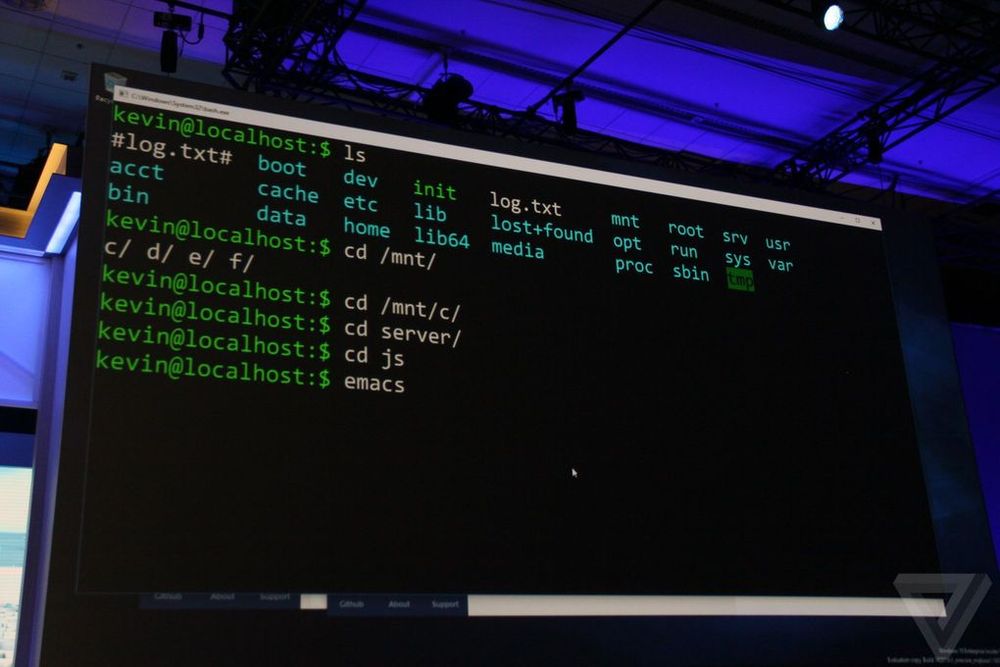
Its that time of the year, where Microsoft will be unveiling new technologies at Build 2016. Microsoft is reaching out to Linux developers in a way that the company never has before. “The Bash shell is coming to Windows. Yes, the real Bash is coming to Windows,” said Microsoft’s Kevin Gallo on stage at Build 2016 keynote. The announcement received an uproarious applause from the crowd. The new functionality will be enabled as part of this summer’s Anniversary Update to Windows 10. “This is not a VM. This is not cross-compiled tools. This is native,” he said. “We’ve partnered with Canonical to offer this great experience, which you’ll be able to download right from the Windows Store.” Third-party tools have enabled this sort of thing for years, but a direct partnership between Microsoft and Canonical should offer even more flexibility and convenience for developers who prefer using these binaries and tools. All of the Linux commands are shown to be running natively, as shown in the video below: https://sec.ch9.ms/sessions/build/2016/P488.mp4 With this added functionality, developers can now code and develop in Linux natively ...

2016 Global Azure Boot Camp

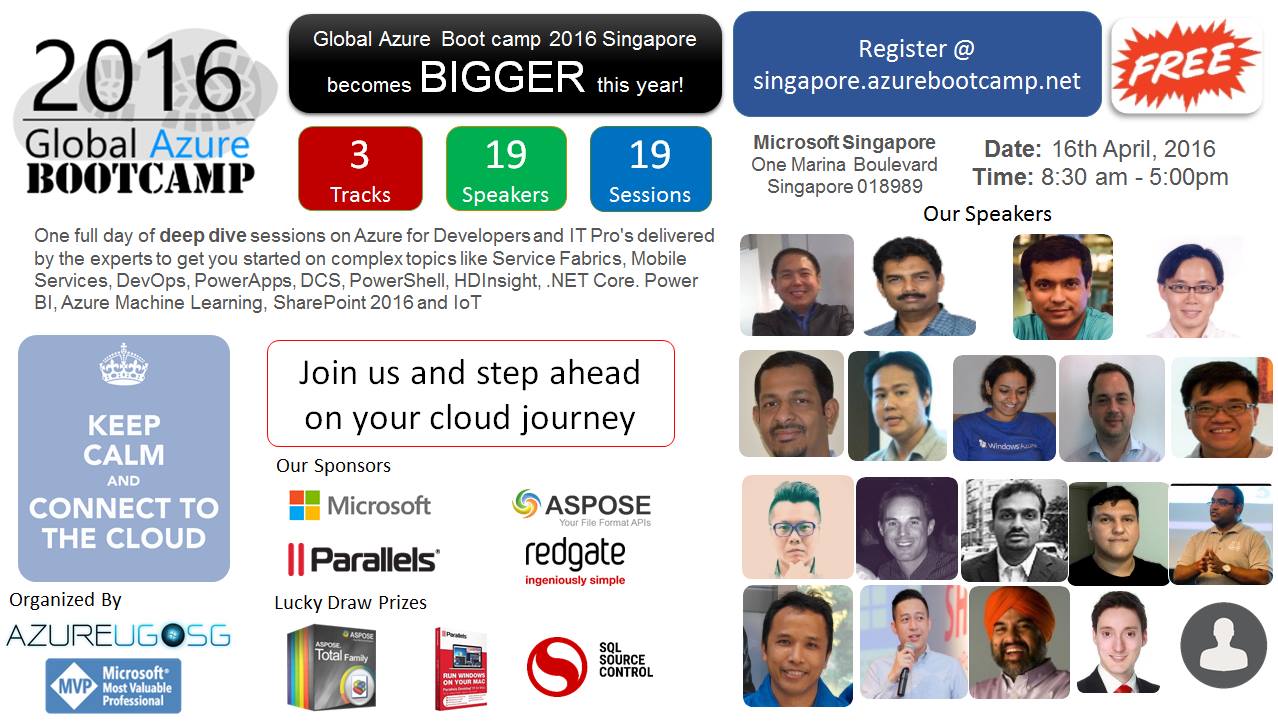
Global Azure Boot camp 2016 Singapore, becomes BIGGER this year! 3 Tracks, 18 speakers and 19 sessions. Join us for a day of fun and intensive training with Azure, register at http://singapore.azurebootcamp.net/ !

Query Performance Insight in Azure SQL

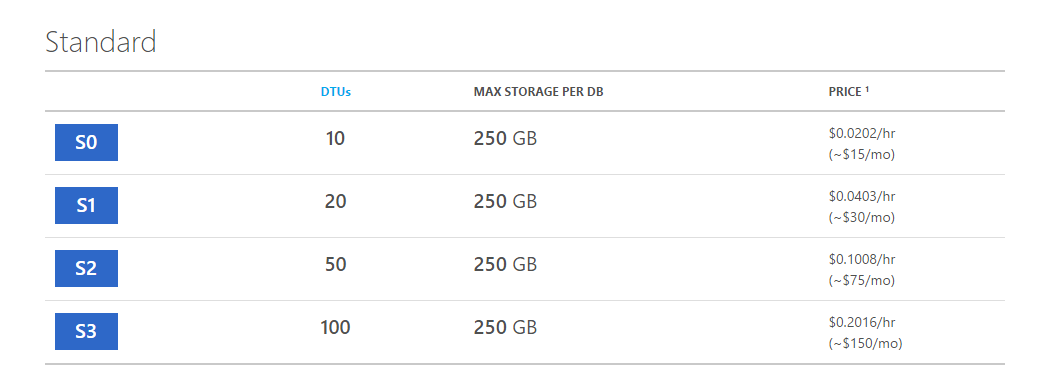
DTU: Database Transaction Unit DTU is an important keyword to understand, especially for those who have been thinking about migrating databases from on-premise MS SQL Server to Azure SQL. Before the migration, there is normally a question to ask, “which service tier and performance level should I use and how much do I need to pay?” Hence, if you read the Azure SQL pricing page, you will be presented with tables similar to what is shown below. [caption id=“attachment_21526” align=“aligncenter” width=“1058”] Azure SQL Pricing (Southeast Asia)[/caption] As shown in the table above, there are four performance levels for Standard Single Database Model, i.e. S0, S1, S2, and S3. Four of them having the same maximum storage for each database, however, they are charged differently because the DTUs they offer are different. So, what is DTU, or the Database Transaction Unit? When the new Azure SQL database service tiers are introduced, DTU is used as a way to describe the relative capacity of a performance level based on a blended measure of CPU, memory and IO rates. DTU is the unit of measure representing the relative power of databases based on the database transaction. S0 offers 10 DTUs, which means S0 can complete only 10 transactions per second. For me, the concept of DTU is a bit vague. When I look at the old chart in Azure SQL Pricing, there was actually an additional row called “Transactions per Second” which had value about the same as or lower than the corresponding DTU. Thus, S0, for example, can in fact only complete 8.7 transactions (instead of 10) per second. So, is there any method to help us making changes in our queries so that we can utilize the given resources in a good manner? Or, how do we know where our DTUs are spent? ...