Microsoft Startup Partner of the Year Awards 2014

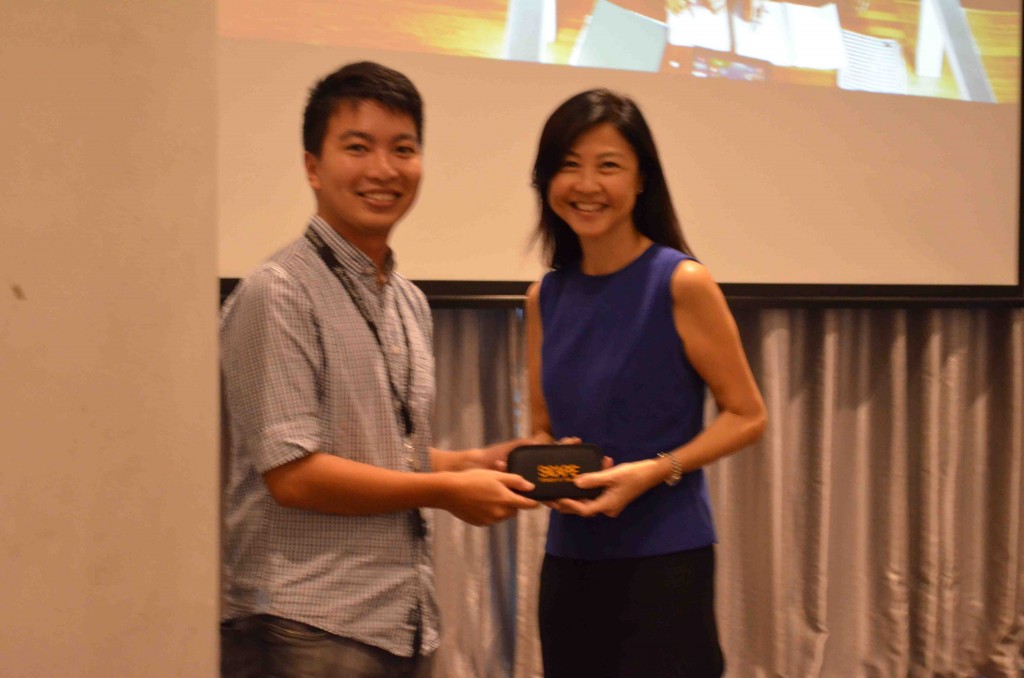
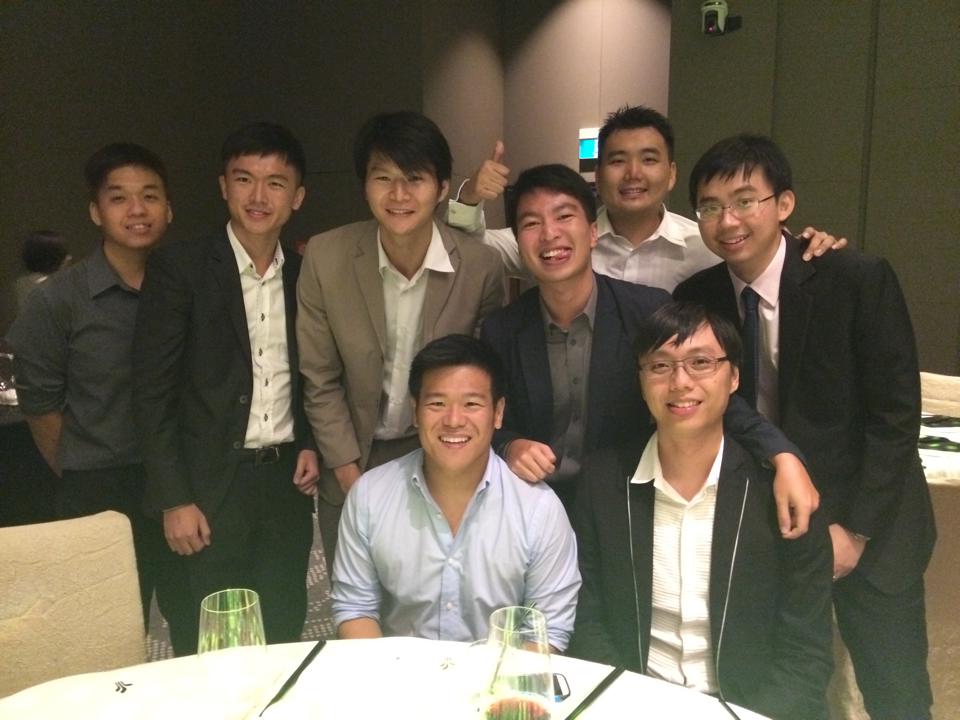
[caption id=“attachment_18832” align=“aligncenter” width=“960”] Clearly the coolest table at the awards ceremony[/caption] The annual Microsoft Partner Awards were held on the evening of 29 October, at the grand ballroom of One Farrer Hotel & Spa - a hotel so spanking new that the taxi uncle didn’t know it existed and got a bit lost trying to get there. Spiffy location aside, it was a night of honouring the many diverse partners Microsoft works with, from resellers to retailers, customers to vendors. Of course, my obvious bias was towards the gathering of BizSpark startup partners. Clearly we were one of the tables with a much (ahem) younger demographic, and though the fried rice I was waiting for on the dinner menu was slightly dry in the end - it was a good opportunity to catch up with the goings-on of some of our brightest Singapore BizSpark stars. Here goes my shameless plug for all four of them. ...

How to activate free Azure credits for BizSpark

So you’ve signed up for and gotten approved for BizSpark; the next step is to activate your Azure credits so you can start running backend stuff for your app. Here are 7 steps to activate your free monthly USD150 worth of Azure benefits. 1) Primary user logs on to BizSpark 2) Click on ‘My Benefits’ > ‘Microsoft Azure’ > ‘How do I get it.’ 3) Clicking on ‘My Account’ will bring you to the MSDN Subscription page, where first-time users need to activate their accounts by clicking on “Activate your account” link ...

Scaling On The Cloud for Singapore Startups

We recently sent out a survey asking BizSpark startups what they wanted to learn about Azure. The results were interesting, with most responding that they wanted to learn how to scale on the cloud. As such, we decided to run an Azure lab for startups this 1 September 2014. You can register here: http://bit.ly/bizsparkazurelab1 Schedule Keynote Compute PAAS IAAS Data and Storage Networking, Caching Things to Bring Microsoft Azure Subscription login details (MSDN subscription from your BizSpark account) ...

Developer Feature: Packnada Co-Founder, Jonathan

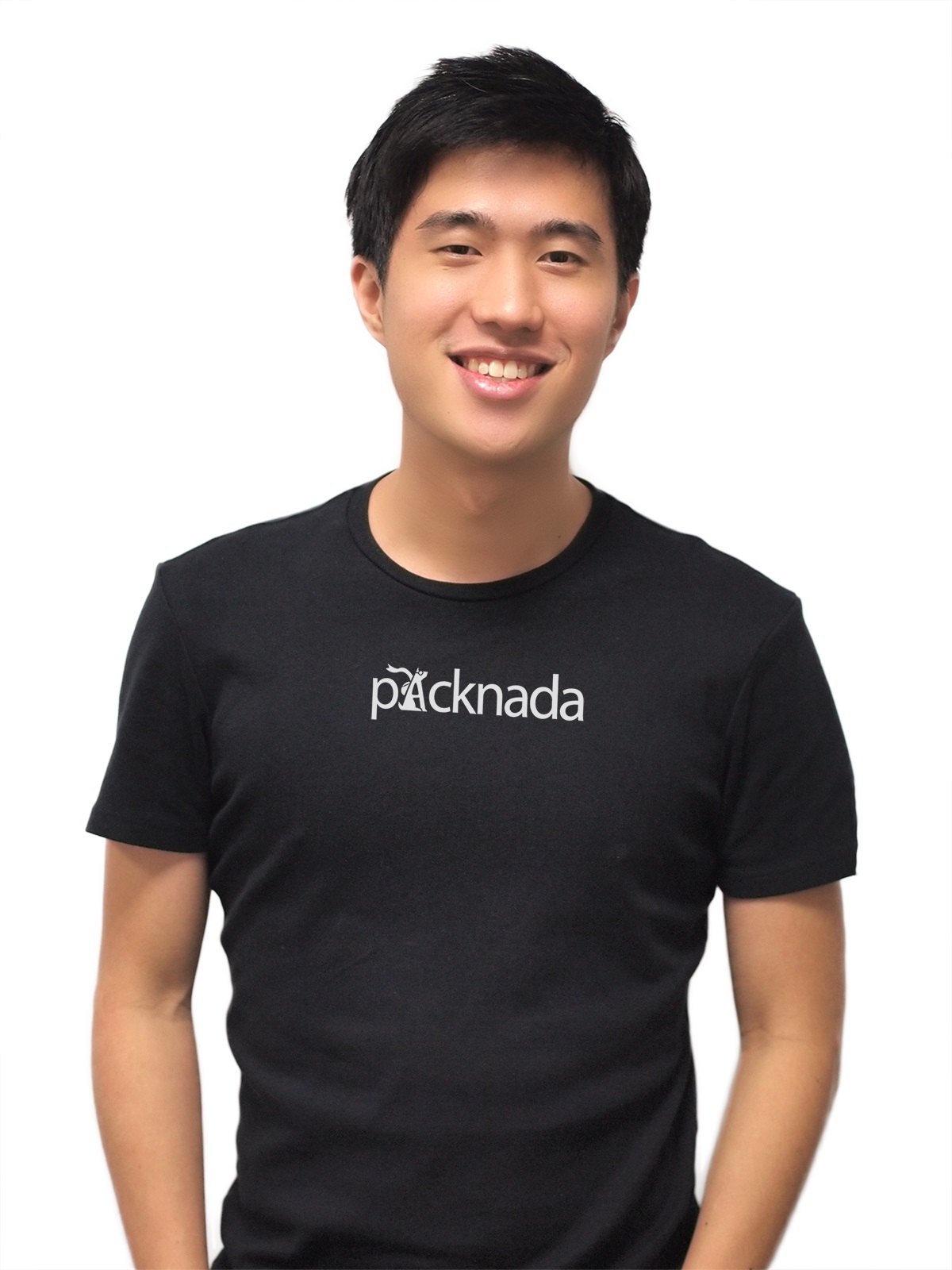
In the next installment of our Developer Feature series, Spiffy talks to the co-founder of Packnada, Jonathan. Packnada is a fresh new Singapore-based startup with a unique online business revolving around business travel and quite literally, your dirty laundry. 1) Tell us about Packnada, and what is its origin story? Like most startups, Packnada was born out of frustration. Johnbosco (my co-founder) and I were stuck in a stupidly long queue at the Hong Kong airport during a business trip, and I guarantee we weren’t the only frustrated ones. If we didn’t have to carry around our clothes, we’d be saving a lot of time, not just from skipping queues, but from skipping packing and laundry altogether. We’re both geeks at heart, so we decided to combine something traditional like clothes, with the concept of cloud storage! If we can have our files wherever we go, why don’t we do the same for clothes? You’d never have to pack, and always find your essentials waiting at your hotel! ...

Developer Feature: Steve Sng

In this Developer Feature series, Spiffy talks to up-and-coming developers to learn what makes them tick. This time around, we have Steve Sng, the CEO and founder of startup LoveByte, a young growing company with the aim of bringing couples closer using technology. 1) Describe yourself in three words. Determined, competitive, problem-solver. 2) What motivated you to start LoveByte? There isn’t a beautiful story behind LoveByte. It was an entirely different product back in 2010 (it was an online search collaboration website similar to Socl - http://www.so.cl/) and it didn’t take off. So my mentor and I were thinking of how to pivot the failed product. Probably because both of us love our girlfriend a lot, we decided to pivot it into an app for couples to “collaborate” and share things privately online. But the first version wasn’t good either. It was a web app and it didn’t stick. So we pivoted it into a mobile app, and that’s what the current LoveByte is. ...

5 things Singapore startups and musicians have in common

As someone who’s been fortunate enough to have a foot in two rather different worlds - the local startup ecosystem and the local music scene - I’ve found some curious similarities. When I speak to startups in my course of work managing the Microsoft BizSpark programme in Singapore, I often joke that a musician in Singapore is very similar to an entrepreneur in Singapore - the only small difference is that as an entrepreneur, there’s at least a chance for you to make your money back. ...

*SCAPE's "Meet The VCs"

I recently got an opportunity to share what Microsoft is doing in the Singapore startup scene at *SCAPE, where HubQuarters is one of many established local co-working spaces. In general, the audience seemed surprised at the existence of BizSpark, which offers local tech startups more than 900 current, full-featured software development tools, platform technologies, and server products to build software applications. I also got asked many interesting questions, the most repeated of which I’ll reproduce below. ...

Developer Feature: Vincent Lau

We were lucky to have met Vincent Lau during one of our social gatherings and we had the privilege to feature him in this month’s Developer Feature series. In this post, we ask the 29 year old CTO and co-founder of PayWhere to share on his mission of marrying social media and e-commerce. Describe yourself in three words. Futurist. Engineer. Innovator What motivated you to start PayWhere? I started a web development firm back in my University days together with a few friends. Hundreds of job requests later, we noticed that people were looking for a fast, easy and inexpensive way to start their own online shop. We decided to address this market gap, and that was how PayWhere started. Incidentally, the earlier business that I started is still around. It is now known as Massive Infinity (MI), and develops both web and mobile applications. MI is also in the BizSpark programme. ...

Exploring Asian Innovations at InnovFest 2014

On April 15th, I was fortunate to be able to attend InnovFest 2014 organized by National University of Singapore (NUS). The theme for InnovFest 2014 is “Asian Innovations Going Global” and the festival featured an exciting collection of Asian innovations, research, technologies, product presentations, and discussion panels. Some of the innovations and technologies that caught my attention included: 1. Interclo - Disaster relief clothing with multiple applications, such as a jacket, a shawl, a sleeping bag, and a blanket. 2. Neural prostheses by Sinapse. 3. Green Steel - Bamboo reinforced concrete by Singapore-ETH Centre Future Cities Laboratory. 4. T-Jacket which simulates hugs to calm and comfort individuals. 5. Cacstix which captures tiny micro plastics in laundry wastewater before it is released into the ocean. Beside exploring the latest innovations, research, and technologies, I also managed to attend interesting product presentations and discussions panels on topics such as technology transfers from research to market, innovations in healthcare for the ageing and silver industry, and next generation learning. Amongst the panels, I liked the discussion on next generation learning moderated by David Lim (Director, Technical Audience Marketing, Developer & Platform Evangelism, Asia Pacific Region, Microsoft Operations Pte Ltd). During the discussion, Dave Cho (founder and CEO of Classting) and Stanley Han (co-founder and CEO of Koobits) shared their experiences on building an edu-startup and provided their insights into the online learning market. Three key market insights highlighted during the panel are: 1. The online learning market is still in its infancy, and the main challenge is to identify your market, your target audience, and your unique selling proposition (USP). As Stanley Ho pointed out, he spent approximately three years refining his business model, identifying and understanding the needs and behavior of his target audience, and developing products that addressed the needs of his audience while maximizing the benefits of the online learning platform. 2. The popularity of online learning will only serve to amplify the role of teachers by enabling each teacher to reach out to more students in geographically dispersed locations. One of the potential future of online learning platforms, such as Koobits and Classting, is to provide personalized learning experiences that is accessible to students from all over the world. 3. Monetization continues to be a challenge for edu-startups and you have to be passionate in your entrepreneurial pursuit despite a seemingly losing course of action. Although Classting has over 80,000 classes in its online edu-social platform and occupies 70% of the domestic market in South Korea, the platform continues to provide its services for free and will only explore monetization avenues in the near future. I would like to say a big “Thank You” to NUS for organizing a great gathering of entrepreneurs, researchers, and innovators to share and exchange ideas and technologies. What do you think of InnovFest 2014? Do you have other great events to recommend for us to participate? Do share with us your recommendations in the comments below and we might just do a special report based on your recommendations!

Developer Feature: Natalie Ip

In this Developer Feature series, Spiffy talks to up-and-coming developers to learn what makes them tick. This time around, we have 26-and-a-half-year-old Natalie Ip, the CEO and founder of delivery startup dilivrit. Describe yourself in three words. Hong(kong)kiwi. Resilient. Persistent. = Scrappy. Describe dilivrit in a sentence. On-demand delivery at your fingertips. What motivated you to start dilivrit? How did you come up with the idea? I love starting up things, it’s like achievement unlocked. I actually started wanting to do a food startup, I even had business cards for the name FOODIP. In the end I opted for food delivery and an investor suggested I should create a great delivery system for other higher margin items as well. So after researching the market I pivoted to a crowdsourced delivery platform. Why now? Riding on the bandwagon of e-commerce and instant gratification! ...