Developer Feature: Garion Goh

In this month’s Developer Feature series, we are honored to have Mr Garion Goh, a 38 year old veteran; Game Designer/Founder of Apptivise (a Microsoft BizSpark startup) to share with us on his journey of App development. How did you come up with Apptivise, and does it stand for anything? Well, I founded another company before Apptivise, called Ectivise, and “Ective” is a combination of “Eco” + “Active”. We added the suffix “-ise” to make “Ective” into a verb, denoting action, which also carries the meaning of “to make or become”, as in materialise, realise, etc, and so it becomes Ectivise; we want an active and vibrant company. So, when I started down the path to focus on App development, Apptivise came naturally from Ectivise. ...

Lessons Learnt From Microsoft BizSpark Summit 2014

On 27th February 2014, Microsoft Singapore held its 1st BizSpark Summit. I was honored to be part of this exciting summit which brought together entrepreneurs and investors in the region to exchange ideas and experiences about the latest developments in the startup scene. Here are three key lessons that I learnt from the Summit: 1. Defining your market size. During the panel discussion on “What investors are looking for in 2014”, panelists pointed out that although there has been exciting developments in the local startup scene, entrepreneurs will need to think globally and not be confined to the Singapore market. An example cited was Redmart, which has successfully raised $3.5 million in its Series A funding and is currently building its logistics capabilities to expand into regional cities. By carefully selecting the right market to target, it will create opportunities and insights that might otherwise be overlooked. There are several methods for gauging the market size of specific industries and customer segments. Besides popular analyst groups such as Gartner Group and Forrester Research, you can also research market statistics on analyst report sites such as IBISWorld and MarketResearch. To determine competitor’s market share and customer growth markets, you can perform calculations based on the competitor’s web traffic that is tracked by Alexa and Quantcast. ...

BizSpark Summit Singapore

EVENT AGENDA 9:00 - 10:00am // Registration and Coffee Welcome to the first ever BizSpark Summit in Singapore! Registration begins at 9am and we’ll be serving you free flow of coffee and tea throughout the event - it’s time to start networking with fellow founders and investors. 10:00 - 10:10am // Opening remarks, Microsoft Singapore Nobuhiro Ito, Director, Developer and Platform Evangelism Group, Microsoft Singapore As Director for the DPE group, Nobuhiro leads efforts to build a vibrant solutions ecosystem through evangelism, community engagement and technology marketing. Hailing from Japan, Nobuhiro is a Microsoft veteran who has experienced the huge wave of growth in both the Consumer and Commercial business. 10:10 - 10:30am // Microsoft Ventures Keynote Vanessa Gao, CEO-in-Residence, Microsoft Ventures, Greater China Region Vanessa Gao is the CEO-in-residence of Microsoft Ventures Accelerator in Greater China. The Microsoft Ventures Accelerator program was launched in Beijing in 2012, providing start-ups with free cloud services, workspace and direct market exposure. During this session, Vanessa will share about the programs under Microsoft Ventures and how your startup can benefit from it. Vanessa was previously Industry Director of the Health Solutions Group in Microsoft’s Greater China Region and led all health-related government affairs, partnerships and strategy. 10:30 - 11:00am // What investors are looking for in 2014 [Panel Session] From new innovations in wearable tech and the rise of Bitcoin and big data, which markets interest investors the most? Join the panel discussion to find out what investors are looking out for in 2014. Frances Du, Director, Microsoft Ventures, Greater China Region Ms. Du has over 10 years of work experience in private equity and venture capital in China, with additional strong experience in corporate finance, investment banking, industry and equity research. Tan Ying Lan, Venture Partner, Sequioa Capital India Yinglan is a Venture Partner with Sequoia Capital India. Prior to joining the firm, Yinglan headed the National Framework for Innovation and Enterprise, investing in high-tech growth ventures in the Prime Minister’s Office in Singapore. Earlier, Yinglan had been the founding Director of 3i Venturelab China and an entrepreneur in the digital media industry. Yinglan was named a Young Global Leader by the World Economic Forum and is a Kauffman Fellow. 11:00am - 12:00pm // Getting to Series A - Fundraising for your startup Dinesh Bhatia, CEO, MyHero Capital is the financial power essential for every potential entrepreneur to scale their product and establish a foothold in the market. Tradehero, developed by MyHero, is a app that allows people to stimulate trades on the stock market without forking hard cash. This BizSpark Plus startup has raised a remarkable US$10 million funding round- one of the largest Series A rounds for a consumer startup in the region and is expanding aggresively. Participating Investors includes Kleiner Perkins Caulfield & Byers and IPV Capital. Dinesh will share about the process of funding raising and how you can overcome the challenges. 12:00 - 1:00pm // Lunch & Lunchtime Concert by Nick Tan We have a special treat for you! Sit back and enjoy local singer-song writer Nick Tan’s performance while enjoying lunch. Nick is no stranger to the local music scene and in the spirit of sharing about entrepreneurial endaveours, he will be also be sharing about how he launched his music career with $0. Sit back, relax and enjoy as he performs for the audience during lunch break. 1:00pm - 1:30pm // The talent crunch - Hiring, training and retaining a great technical team in Singapore [Panel Session] A great technical team can make or break a startup’s product development and speed to go-to-market. A recurring problem we hear from founders is the lack of technical talent and the challenges in hiring the right technical people. In this session, discover what motivates a great technical team and how to go about building it from two companies who have succeeded in doing so. Carl Coryell-Martin, Principal, Neo Neo is a global product innovation company. Neo designs and builds mobile and Web products, creates corporation innovation programs, and transforms internal talent by pairing and teaching. Carl Coryell-Martin has worked with agile software methods since 2000 when he implemented the practices in Kent Beck’s Extreme Programming Explained in his first startup. He was previously the Practice Manager for Pivotal Lab’s Singapore development office. Among his many projects, he built the successful BirdsEye iphone app for North American bird watchers. Mark Glikson, Founder & CEO, Gumbuya Inc Mark Glikson, is the CEO & Founder of Gumbuya Inc. Gumbuya is building a contextual semantic platform = “a way to make things work together, as they were intended”.Prior to Gumbuya, Mark spent 9 years at Microsoft Corporation, most recently as the General Manager of the Developer and Platform Group for Asia Pacific. In his life previous to Microsoft, Mark worked as a Chief Technology Officer, Architect and Founder always centred by how technology can transform the way people live. Shen Qiang, CTO-in-Residence, Microsoft Ventures, Greater China Region Shen Qiang is an accomplished leader with 20 years of engineering development and management experiences. He is the CTO in residence for Microsoft Ventures, focus on building a strong portofolio of startup companies and accelerating their growth. In the past years, he focused on telecom and internet services areas and built several industry significant services. Qiang has the right mix of entrepreneur thinking and start-up style execution. In his rich experience, he built the technical team from scratch and then grow the team for many times, and led them to create some innovative online services successfully. 1:30pm - 2:00pm // Making better decisions with analytics Marc Andreesen once said that “markets that don’t exist don’t care how smart you are.” Whether you’re a startup founder trying to disrupt an industry, or an intrapreneur trying to provoke change from within, your biggest risk is building something nobody wants. By measuring and analyzing as you grow, you can validate whether a problem is real, find the right customers, and decide what to build, how to monetize it, and how to spread the word. In this session, Dibyo will share how analytics can help you make better decisions. Dibyo Haldar, Analytics Manager, Facebook Dibyo is an analytics and insights professional with 11 years of experience across Coca-cola, Marketics and Skype. He is currently an analytics manager at Facebook. 2:00pm - 3:00pm // Startup Showcase Coming soon! Looking for amazing pitches from some of our most innovative startups? After a rigorous selection process, seven startup finalists will pitch to our Microsoft Ventures team and stand a chance to pitch at Startup Asia 2014. Startups will be pitching live in front of the panel of judges and investors. So take a look how these startups deliver their pitches and get some tips for your own. Our Partners ...

BizSpark Startups - Join us for Pitch Training by Tech In Asia

Hey BizSpark Startups**!** Microsoft BizSpark will be organizing BizSpark Summit Startup Pitch where startups will pitch to Microsoft Ventures and stand a chance to enter Startup Asia 2014 Arena to bring home a prize money of US$10,000 in cash. There will be two qualifying rounds. Pitch Training by Tech in Asia Startups can register to attend a free pitch training session by Willis Wee, Founder of Tech In Asia. Each participating startup will give a 5-10 minutes pitch, followed by Q&A and discussion. Participants will be provided with training and feedback on pitch delivery techniques. *Only for 20 selected BizSpark startups. The business pitch will be 5-10 minutes compelling and concise summary of a proposed solution or product. Slides, demonstrations and other presentation materials are encouraged. Pitch to Microsoft Ventures at BizSpark Summit 2014 The top startups will be invited to BizSpark summit, which will be held on 27th February 2014 at Microsoft Singapore Auditorium. Six qualifying startups will then present to a panel of distinguished judges from Microsoft Ventures China and stand to qualify for Startup Arena 2014 at Startup Asia. Details of the pitch training: Date: 5th February 2014 Venue: Microsoft Singapore, One Marina Boulevard Level 22, Room 22BR-01 Time: 1pm- 4pm Agenda for Pitch Training Workshop: 1:00 - 1:15 “What makes a good pitch?” 1:15 - 1:30 “Guidelines on how to create a good pitch” 1:30 - 2:15 “Pitch creation (with template provided)” 2:15 - 2:50 Pitch Practice 2:50 - 3:00 Wrap up Pitch Criteria: 1. Clear, concise, professional and stayed within the ten-minute time frame. 2. Product or service concept, customer benefits and market opportunity are clear, compelling. 3. Business seems viable and feasible. The online registration form: http://sdrv.ms/1lAfF3N Deadline: 28 January 2014 Thank you for your interest. We look forward to hearing great pitches from you guys!

2 Attorneys Supporting and Growing Scotland's Startup Community

Peter McBride (L) and Jim Adams(R), Scintilla. In Edinburgh, Scotland, Huifen met Jim Adams, a patent attorney with a passion for helping startup companies in Scotland and beyond. Jim and his colleague Peter McBride (both attorneys) recently launched their own IP firm, Scintilla, specialising in patent and design filing. They support the startup community in Scotland by providing mentoring and cost-conscious, value-added IP services. Huifen was naturally intrigued, being a lawyer herself and a regular mentor to Singapore startups. She speaks to Jim to find out more. 1. How long have you been a patent attorney for? Which are your technical areas of specialty? We have nearly a quarter of a century of experience between us! Pete has worked in the patent profession since 2000, and I started in 2001. We specialise in electronics and software, covering a wide range of technologies such as microelectronics, telecoms, information technology, software, optoelectronics, nanotechnology and the physical sciences. 2. Is it correct to say that your firm can file applications for patents and registered designs in the UK as well as for the EU? Yes, we can secure patents and registered designs by representing our clients in the UK and in Europe, acting for clients from around the world. Clients come to us due to the specialist nature of the procedures involved in obtaining UK or European rights. Sometimes they need to appoint a local representative. We also have expertise in managing global patent portfolios, including securing US patents, which is especially useful for business method or less technical software inventions that may not be patentable in Europe. Once filed, a patent application undergoes a rigorous examination procedure and we are involved in arguing our clients’ case to get the patent granted. We also file registered designs for our clients. The Community Registered Design is a cost effective way to obtain EU protection for the appearance of a product. Other IP services we provide include patent renewals, due diligence, freedom to operate assessments, patent infringement and validity opinions. 3. When did you start giving special support to the startup community? What motivated this? Any startup is motivated by passion and enthusiasm. In our case, we are excited about innovation and we naturally want to engage with and be part of the local startup community. There is a natural affinity because we are a startup ourselves, launching in January 2013. Our firm was founded on belief that working with startups is some of the most fun and rewarding work that we do. We love to help startups get established and to be a part of their growth so we can have long term relationships. We have to support startups because they find themselves in a “Catch 22” situation with patents, where they have to protect their inventions before they make or raise money. But quality patent protection costs money! 4. How do you provide this support? We provide mentoring support, and also do our best to bill for work in a way to ensure value for startup clients. The key aspect for us is making sure that our actions match our words, and through spending time in the startup community, and through the work we have done for our early stage clients we are showing that our support is genuine. We recently had the privilege of being a mentor for budding entrepreneurs at a “3 Day Startup” event in Edinburgh organised by Launch.ED and supported by the Scottish Institute for Enterprise and the Open Innovation Project. Startups inevitably need more guidance than established clients, because they are busy learning about many new aspects of their business, and they may be unfamiliar with intellectual property. When it comes to chargeable work, we operate where possible on a fixed price basis. We have set fees for repetitive, smaller tasks. For larger tasks, such as patent drafting, we agree on a fee with the client after scoping out the job. We are committed to getting to know our startup clients and fostering a supportive relationship. So, outside of agreed jobs, we do not charge for phone-calls or meetings to just “catch up”, or for minor administrative tasks, such as providing quick updates to help startups keep track of their portfolio. The end result is a process that matches the billing to the value that has been added, and is predictable. Predictability of costs is crucial for startups. Initial consultations for prospective new clients are also free of charge with no obligation. 5. How do you balance between the usual corporate clients and the start-up cases which you take? Corporate client work represents a reliable source of income. But in our view for proper job satisfaction, this needs to be balanced with the privilege of making a real difference to a fundamental aspect of the business of a startup or a SME (small or medium business). So we do need to make sure we have the right balance of work. Key to our own success is to recruit more patent attorneys who share our enthusiasm. Of course, when startups grow and succeed that helps us, but we are lucky to be in Scotland where there are so many dynamic young companies, an active angel investment network and a thriving academic network, so we are confident that simply being part of the startup community will reap its rewards. 6. Is there anything else of interest, which you’d like to mention? We are developing some product offerings that will provide innovative services for startups but (in true IP professional style) cannot reveal these yet, so watch this space to see what comes next! Additionally, there will be interesting changes for intellectual property in Europe and in Scotland. There are moves toward a unitary European patent. Currently, a European patent provides a single procedure for examination and grant for up to 38 European Patent Convention states. However, after grant a European patent is validated in selected states for enforcement through the different national courts. The proposed unitary patent with a Unified Patent Court will allow decisions on patent infringement and validity to apply with equal effect across all EU Member States. There is a referendum on Scottish independence in 2014. Whatever the outcome, the indicators are that there will be continuity in the legal framework for protecting intellectual property rights. We are confident that Scotland will continue to be a safe and cost-effective entry point for European intellectual property protection.

Whizmeal: Healthier food for kids

Today, we are glad to have an exclusive interview with our very own Singapore-based tech startup, Whizmeal, founded by Soon Mei. She explains her idea and her web portal that was featured in Tech in Asia, e27, and Yahoo! News. What is Whizmeal about? Soon Mei: Whizmeal was designed to enable parents to understand more about school meals’ nutritional values. By understanding more about nutrition, parents are able to pre-order healthier meal choices, monitor their child’s daily intake and constantly give their child advice on what food they should eat. How does it work? At our website’s “Order Now”, parents and their child will be able to select either a package meal program or item from a la carte menu. During this pre-ordering process, parents and their child are able to browse the calendar days and read the meal details of the meal they prefer. To complete the meal ordering process, parents will be directed to an online payment system. How and why did you get started in this industry? Why the decision to build this startup? Soon Mei: Having been in the F&B Industry for the past 7 years and running the Singapore Food Festival in 2006 & 2007, I noticed that people never really knew if they were eating healthily or not. For example, one would simply assume that eating vegetables is considered as a healthy diet when in fact, the vegetables have been stirred fried with lots of oil. As such, I felt that the gap between the public and Food & Nutrition is far too great and I strongly believe in educating the young about Food and Nutrition so as to empower them to make better food choices when they grow up. Furthermore as parents, we do not understand how the meals are prepared, thus, I wish to use my experience and knowledge to make a difference and address this gap in the school canteen and childcare market. Did you seek out any relevant mentors and people for help prior to startup? Soon Mei: Yes. I took up a program on Specialist Diploma in Franchise and Enterprise Development and started the inception of Whizmeal, as a project. The hands-on experience allowed our team to meet up with several private and public schools to understand the key concerns and consideration at current canteens. As a member of Founder’s Institute of Singapore Chapter, we are very privileged to be able to meet up with Jeff for his advice. ...

BizSpark Night: Chinese Venture Fund QuestVC (Part 3)

At the recent BizSpark Night for December, we had a fireside chat with James Tan, founder and managing partner of QuestVC, China’s leading seed to angel fund for technology. He disclosed how he started 55tuan (a successful Chinese group buy site) and then, QuestVC. How James started 55tuan and then QuestVC James went to China on a scholarship, meeting his cofounders of 55tuan from Qinghua University. 55tuan is currently one of the largest group buy websites in China. He further explained that it was not easy for them to sustain 55tuan, as China experienced a myriad of Groupon clones over the past couple years, but the majority of them could not keep up with the fast pace of China’s tech industries and went out of business. James later with his partner decided to start on another project called QuestVC, which was a venture capitalist firm based in China. This attracted many e-commerce companies to seek help from QuestVC to get funding and mentoring opportunities. However, James’ stand is that he also hopes to help to all companies in other tech industries. How many startups has QuestVC invested in? James explained that he funds companies at the seed to angel stage. QuestVC invested in 6 companies over 1.5 years and 2 Singapore tech companies, Carousel and Burple. The companies they invested are independently managed and display high potential in the market. Carousel allows consumers to sell their items on their platform and get cash in return while Burple is a localised food app for photo sharing. With the help of QuestVC for seed funding, they are intending to expand their influence to China and also Singapore’s neighboring countries, Indonesia and Malaysia. What suggestion do you have for startups that wish to apply for QuestVC? What do they need to do? James encouraged startups that wish to seek funding from QuestVC to source for strong financial backing first. One of such ways is to seek help from government agencies such as ACE or SPRING Singapore. They provide necessary information, connections and provide financial grants such as series A funding to assist companies to progress. After applying from government agencies, startups can then apply for QuestVC with their working prototype and discuss with James for seed funding and support for expanding overseas. Of course, the team will need to have the ability to articulate the opportunity and how they going to execute their ideas. What is the start-up scene like in Singapore? Are their any suggested programmes to promote entrepreneurship? James pointed out that in Singapore, there are many potential graduates that choose not to be startup entrepreneurs because they feel the need to work in big multinational corporation companies. The vast majority of them are not willing to take up risks with a startup that may or may not succeed. To better foster the entrepreneurship dream of starting a tech company, the NUS Overseas College (NOC) programme collaborated with the highly prestigious Tsinghua University for students to study entrepreneurship and internship full time with companies in Beijing. The programme will play a key role in nurturing entrepreneurs who then can engage with China. James is supportive of the programme and he hopes to see more batches of entrepreneurs coming from Singapore in near future. We hope that BizSpark Night 2013 has provided valuable advice to startup entrepreneurs. We are grateful and want to thank our distinguished speakers for taking time from their busy schedules to contribute to this meaningful event.

BizSpark Night: Tips for Venturing Into China (Part 2)

For December’s BizSpark Night, we were privileged to have Gary Gan as one of our guest speakers. Gary is the Business Development Director for TradeHero, a mobile stock market stimulation app. TradeHero recently made headlines for raising $10 million in series A funding from KPCB China and IPV Capital, a Chinese-based venture capital firm that invests in early stage high-growth technology firms. He gave us some practical tips to startups starting their first ventures into China. China has obvious potential, with a massive domestic market hungry for tech With a population 1.35 billion strong and over 700 million users with internet access, China is a lucrative market to be tapped. Gary strongly encouraged more tech companies to enter China where the consumption demand for tech - be it mobile, social or web - is massive. This can be demonstrated by the android store exceeding its available 500 applications, which also justifies the intense competition. Many factors fall under the big umbrella of business strategy. However, the main idea is to weigh the costs and benefits. Gary encourages startups to locate their firms near to partners, clients and customers. This enables startups to have easier accessibility to more opportunities and undiscovered markets, save on transport costs and expose themselves to a larger diverse pool of manpower. Startups should travel down personally, preferably with a local team to do an on-site inspection to before launching their new firm there. Be well-versed in local infrastructure and regulations Awareness of the local government regulations and incentives must be at your finger tips. This can really assist or sabotage the company. Government expenditure to boost trade is very generous in China, and there are many incentive schemes cater to new startup films. Examples include the taxation relief system and Wholly Foreign-Owned Enterprise (WFOE). Equity and Cooperative Joint Ventures are also strongly encouraged. Support from the government will mean lesser restrictions and more incentives, which can maximise profits margins for startups. Do your homework, get assistance from industry experts Government agencies such as IE Singapore, Spring Singapore, IDA and NUS Enterprise help startups to boost their overseas marketing presence, branding consultancy and reducing headhunting costs. More often than not, these agencies support the setting up and staffing of marketing offices overseas. They also subsidise third party consultancy costs for branding activities. Therefore, seeking help from these organisations be a great help in help you introduce your first office locally or in China. Link to Gary Gan’s Slides https://www.dropbox.com/s/4rdh9xce3mftrph/BizSpark%20Gary.pptx

BizSpark Night: China's Tech Landscape (Part 1)

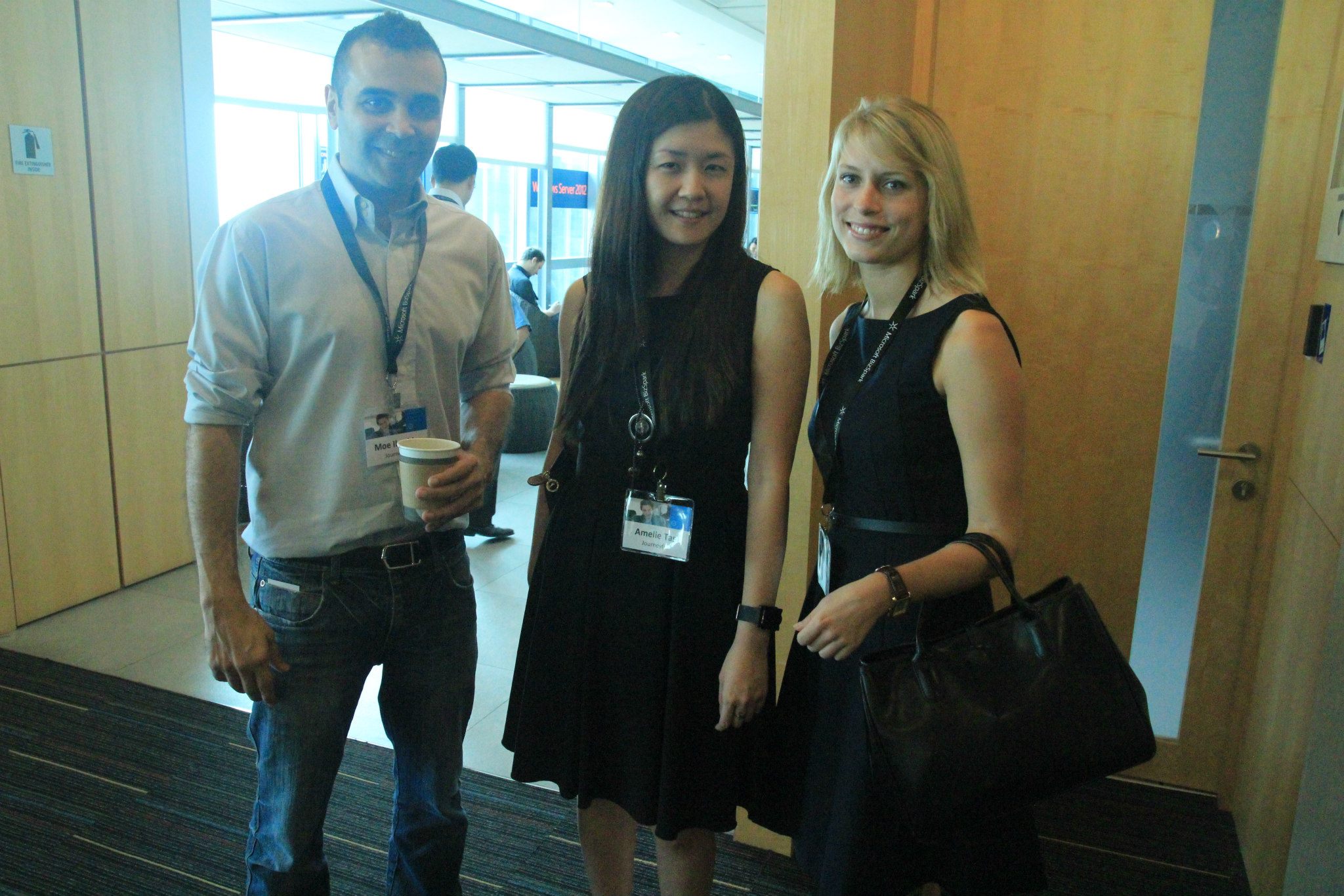
Organised by Microsoft BizSpark, this year’s BizSpark Night was held on 28 November at Microsoft Singapore Level 21 Auditorium. Distinguished speakers like Bruce Wang, Gary Gan and James Tan were present to educate startups on introducing their presence into the world’s second largest market, China. China’s tech landscape: An overview Bruce Wang, a senior evangelist in Microsoft Singapore, was the Director for RenRen Inc. at Microsoft China for 6 years from 2005 to 2011. He outlined the difficulties of venturing into China such as cost, location, hiring and promoting of business. Having sufficient financial power and the ability to utilise them to the maximum potential allows startups to survive in the increasingly competitive Chinese landscape. Having abundant capital can allow for a good foundation and an advantageous headstart. Choosing the right location is crucial as it enables startups to source for their skilled laborers. This is especially so for tech companies which are knowledge-intensive industries. Beijing and Shanghai are favorable locations where skilled talents are in abundance. The 1,106 universities allow new firms to find their skilled manpower more easily in these areas. However, opportunity costs must also be measured as absolute costs are higher due to the poaching of scholars among companies. Due to higher costs of living in cities, employees also anticipate a higher salary compared to those in the inner cities like Chengdu and Wuhan. Successful examples of startups Bruce pointed to DouPing and PPTV in Shanghai, and Weibo and RenRen in Beijing, where Bruce happens to be from. Inner cities can also be considered based on the characteristics of the firm - for example, TaoBao, China’s cheapest and largest online marketplace, developed its headquarters in an inner city, Hangzhou, for the pool of cheaper labour. In China, social media censorship is very heavy due to government backing of local portals. Popular social media platforms such as Google, Facebook and YouTube are banned in China. They are substituted by local online portals such as Baidu, RenRen and Youku respectively. Hence, expanding one’s branding overseas can be taxing due to unfamiliarity with these platforms. However, startups can do mobile advertising in China through approaching channels such as AppFlood, Baidu, and Qihoo. Networking and yearly events Annually, tech conferences such as Global Market Internet Conference (GMIC), China Joy and TechEd China bring in prominent speakers from Chinese companies to discuss issues ranging from market entry, mobile trends and internet technologies. International startups will also get to showcase their products to investors and raise funds. Lastly, Bruce also mentioned Microsoft Ventures in China, a startup initiative aligned with the BizSpark programme that can help startups to acquire free tools, cloud computing resources and global routes to market with mentorships and seed opportunities. Startups entrepreneurs that are interested in the programme can email bruce.wang@microsoft.com for more details. Link to Bruce’s PowerPoint slides: http://sdrv.ms/1etWKCX [youtube width=“425” height=“344”]https://www.youtube.com/watch?v=bQ2qOqXauuw [/youtube]

Celebrating 5 years of BizSpark in Singapore

When we announced a program for startups called BizSpark, the idea that “Microsoft cares about Startups” was new to the Startup Community. That was November of 2008. This month, BizSpark celebrates its 5th Anniversary. In five years, more than 85,000 startups have participated in the BizSpark program from 165 different countries around the world. 100,000+ developers have become BizSpark members and we’re partnered with over 1,500 organizations who, like us, are striving to help startups every day. It has always been our goal to help startups succeed and over the years, BizSpark startups have been involved in big success stories, like Yammer being acquired for $1B and just last week, BizSpark grad, Criteo, raising $250M from their IPO. But, just as meaningful, are the many stories we have highlighted in our Featured BizSpark Startup Series. Through these interviews, we get the chance to hear, first-hand, about the journey of these startups and how they are making their dreams come true. These founders also share valuable advice for other startups. We have recently created The BizSpark Show – interviews with startup founders and investors from around the world with a focus on BizSpark members who are building the next great companies from the ground up. We are inspired and fascinated by the ideas, tenacity and sheer will startups possess and we invite you to share your own BizSpark story with us: bizspark@microsoft.com. In Singapore, we have 800 startups that are currently on BizSpark or are BizSpark Alumni. To celebrate 5 years of BizSpark here as well, we decided to tell the story of two of our startups, TradeHero and MoveCorrectly. We hope you enjoy the videos as much as we have watching our startups grow together with us. BizSpark Plus startup TradeHero is ranked #1 Finance app in 75 countries and runs on top of Windows Azure. CTO Dominic Morris talks about his journey with Tradehero, Windows Azure and the future of Tradehero after raising $10M Series A For Its Stock Market Trading gamification app. ...